
I’ll always remember seeing a Israeli Muslim doctor on TV a couple days after October 7th 2023. The fact that he was Muslim matters, since he was working in Israel in an Israeli hospital and talking about Jewish victims of the Hamas attack. My memory is hazy, but I believe he was a pathologist, which would make sense given what he was sharing. The screen flashed a warning: Viewers may find the following content disturbing. The news anchors repeated that phrase at least twice.
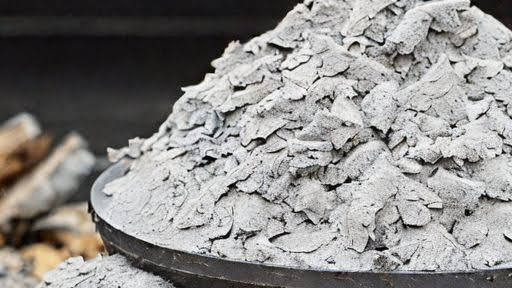
Then the doctor held up a bag of gray ash.
“This bag has, at least, the remains of three people.”
I’m not here to litigate Hamas or the Likud party run by Benjamin Netanyahu. They’re both evil. I’m not here to make excuses for ultra-orthodox settlers who frequently beat Palestinian kids to death for no reason other than hate. They’re evil, too. American funding that has aided in the near starvation of Gazans and wanton destruction of life? Evil. It’s all evil. Within that evil there are shades of gray where we need to make our bed with the devil. What is the Middle East without Israel? That question has very different answers pre and post destruction of Gaza. Oh, yeah, and post-bombing of Iran. And southern Syria. But wait, there’s more…Lebanon, too!
The day after the October 7th massacre by Hamas on innocent people attending a concert, I bought a Magen David (Star of David) from Israel. I felt an unmistakable connection to the Jewish people and the struggle. Some people fairly point out that now the whole mess is my problem. Yes, it is. But let me remind you: American tax dollars are inextricably tied to ultra-Zionist violence and genocide. It’s not just a Jewish problem.
The strong pull I was feeling was twofold: spiritual and political. In the era of Trump 2.0, the two are hard to separate. But let’s start with the political.
Seeing that bag of ash was a visceral call to a peoplehood that has endured the trials of time. Maybe that’s just in my DNA as a Unitarian Universalist, a South Sider, and an LGBTQ+ American. Someone quipped recently: “Boy, you must really like oppression.” It’s funny, but it also assumes that oppression has the last word with any of those identities. So, it’s also a sad observation. Life is more than oppression.
For me, the political here is about peoplehood — the body politic. It’s not about red or blue or Likud or whatever. To be aligned with a people is indeed to share in the good, the evil, and all of the in-between. It is inescapable. It is also not exclusive to Israel. The temptation today is for American progressives to distance themselves from what’s happening with MAGA in our country. But I wonder, what if we all asked how we all, as a nation — a people, share responsibility for this mess? That’s what I’m getting at. To be clear, I have no answers, but I appreciate people who ask the question.
Political alignment with the complex web of Jewishness and Israel doesn’t make me a supporter of what’s happening. It also doesn’t excuse me. I am responsible for that complexity and tragedy now (I would still be if I was a Gentile American, by the way).
But in this journey, I’ve connected with groups of people who imagine a different way. They’re fighting for change, amidst tragedy, in the ways they can. We will not end the American pipeline of money to Israel overnight. But we can write new liturgies and rituals and prayers for lament and celebration. We cannot convince Bibi he is wrong. But we can forego our Aliyah to Israel and imagine a Judaism that is not just anti-Zionist but post-Zionist. (Try as people may to reclaim the word “Zionist” as a positive thing, yeah, no. It’s gotta go. Even if you iron out the complexity within Judaism, Zionism is so horribly wrapped up in American Evangelical eschatology).
In Judaism, the body politic is not even a stone’s throw away from the spiritual. As a Unitarian Universalist minister, I come out of the strain of UUism that does not really look for or care about miracles, the supernatural, and all of that. The longer I do this work, though, the more I surrender to the mysteriousness of life and the Universe. Are the handful of things in my life that have occurred without explanation miracles? I don’t know. But close enough.
The strong pull to Judaism after October 7th was not a miracle. It was the culmination of life experiences, values, practices, seeking, and returning again and again to this vast tradition. That does not erase the tragedy and pain of that day and the aftermath. I am not thankful for that. But I am thankful that I received the existential nudge I needed to dwell on this. I’ll have more to say about “miracles” another day.
This gets me thinking about tragedy itself. Is tragedy something we need for change? I would say yes. It’s not just joyful discovery, sunny days, and a life of ease. It’s not ethical or intellectual purity or a clean conscience, either. Sometimes, the depths of life are what’s needed.
There’s something about me that just accepts this idea. Maybe it has to do with my upbringing and the culture I come out of. When you come of age amidst chaos, there’s choices involved. I remember very early on at a young age making a clear choice: I will not give in to the chaos. I didn’t quite know what all of the chaos was or how I would make it through, but I would not give in nonetheless.
Each family, cultural, and personal tragedy from my background has been a catalyst for growth and change. So much so, I’ve had to learn how to find growth in equilibrium. It was foreign to me but is getting more accessible.
Judaism offers, quite readily, this framework. The crucibles for change are in joy, in equilibrium, but, yes, also in tragedy and chaos. Christianity tells me I need Jesus to make it all work. American Buddhism veers off into minimization quite often. Unitarian Universalism can get lost in aspirational visions of the world. Judaism holds the difficulty and pain along with the good and doesn’t try to fix it. It just is. (To be fair, all of the traditions above can do that, too.) Does that mean it’s a perfect tradition? No. It can stray off course, too. Case in point: Israel, violent settlers, the Likud party, ultra-orthodox abuse scandals, and beyond.
I’m not looking for purity. Spirituality is so much more alive in the muck.
And maybe that’s it. Judaism is giving me renewed life in the muck…as a husband, a son, a friend, a minister, a Unitarian Universalist, and beyond. What might do that for you?
Look to any Jewish celebration and you have the muck: tragedy and joy. Look to every spiritual practice…there’s the muck. 613 mitzvot (commandments) quickly remind us we will never achieve any perfection or code of holiness, no matter how hard we try. Passover doesn’t just tell the story of freedom from Mitzrayim (the narrow place; Egypt), but it tells the story for our lives right now. And still, amidst all of it, there’s this idea of teshuvah — return. Return to whatever wholeness is possible, to the complexity of life, to the muck, and to the weird moments of life where we don’t know what to make of it all. Oh, and yes, repair is always possible for our lives and the world.
I think that’s what compelled me to buy that Star of David on October 8th. This hope and need for repair and return in the world, but also my life.
How can I participate in the repair needed in Palestine and Israel? In America? In communities of faith? In my local community? My life history? The places where I still need to heal and grow? In relationships with others? And beyond.
Studying for nearly two years was not taken lightly. It was filled with doubt. The week of my mikvah was the week Israel bombed Iran. There are Nazi’s proudly displaying their nonsense on the streets of America in increasing numbers. I don’t even know what to feel about Israel on most days, but it’s mostly deep disappointment and disgust. But I still did it. The gifts of Judaism are more than the political as it relates to Israel or American Zionism. I would say those aren’t gifts at all. No, the gifts are in the wider body politic, the peoplehood that wrestles and returns to wholeness with great imperfection. It’s the freedom to immerse yourself, literally, in life and tradition even if it’s murky and complicated. It’s the great image of every Jew and every friend of Judaism at the base of the mountain, hearing words of hope.
I’ll never stop having to wrestle with this. But it’s alive and restorative.
Next time, let’s look at the two year journey of study. Until then.
Mindful of the complexity of this topic, here’s What This Post Left Out:
- Jewish self-determination in Israel;
- Palestinian self-determination & statehood;
- Thousands of years of fighting, bloodshed, & conflict in the holy land;
- The consequences of colonialism shaping the present day crisis in Israel;
- What could a healthy “zionism” by a different name look like?;
- The absolute horror of Evangelical support for Israel. It’s ugly and scary and they’re in power in the USA right now;
- The truth of when you open your mouth with an opinion on this matter, you’re automatically in trouble, because this isn’t just about statecraft, it’s about emotions and trauma.
- The complexity of LGBTQ+ and BIPOC support for the Intifada and why that worries me.
- The silencing of Jewish UUs while allowing anti-semitic statements to be made at the 2024 UUA General Assembly.
- You know, this list could just go and this topic is really awful, difficult, and painful. Can we just acknowledge that pain and sit with it?